
Table of Contents
Introduction

Today feels personal in a way I didn’t expect.
Ten years ago, on this exact day, I graduated high school.
It’s strange how memory works. I don’t remember every speech or every face in the crowd, but I remember the feeling. The caps. The gowns. The awkward photos. That weird mix of excitement and uncertainty that sat heavy in my chest. At eighteen, graduation felt like a finish line, like once I crossed that stage, life would somehow make sense.
It didn’t.
And now, ten years later, I understand something I couldn’t have understood back then: graduation was never really an ending. It was the beginning of becoming. It was the start of years filled with growth, setbacks, healing, and quiet breakthroughs that slowly shaped me into the person I am today.
That’s why thinking about the graduating class of 2026, especially autistic teens and their families, hits me so deeply.
Because for many autistic teens, graduation isn’t just about earning a diploma.
It’s about everything it took to get there.
1. Graduation Hits Different for Autistic Teens
When most people watch a teenager walk across a graduation stage, they see celebration.
Families of autistic teens often see survival.
They see years of effort hidden beneath a cap and gown. They see moments that never made it into yearbooks or report cards. They remember the mornings when getting out the door felt impossible, the school days that ended in total exhaustion, and the nights spent wondering whether tomorrow would be easier.
That’s why graduation hits differently.
The cap and gown are what everyone sees.
The breakthroughs are what made that moment possible.
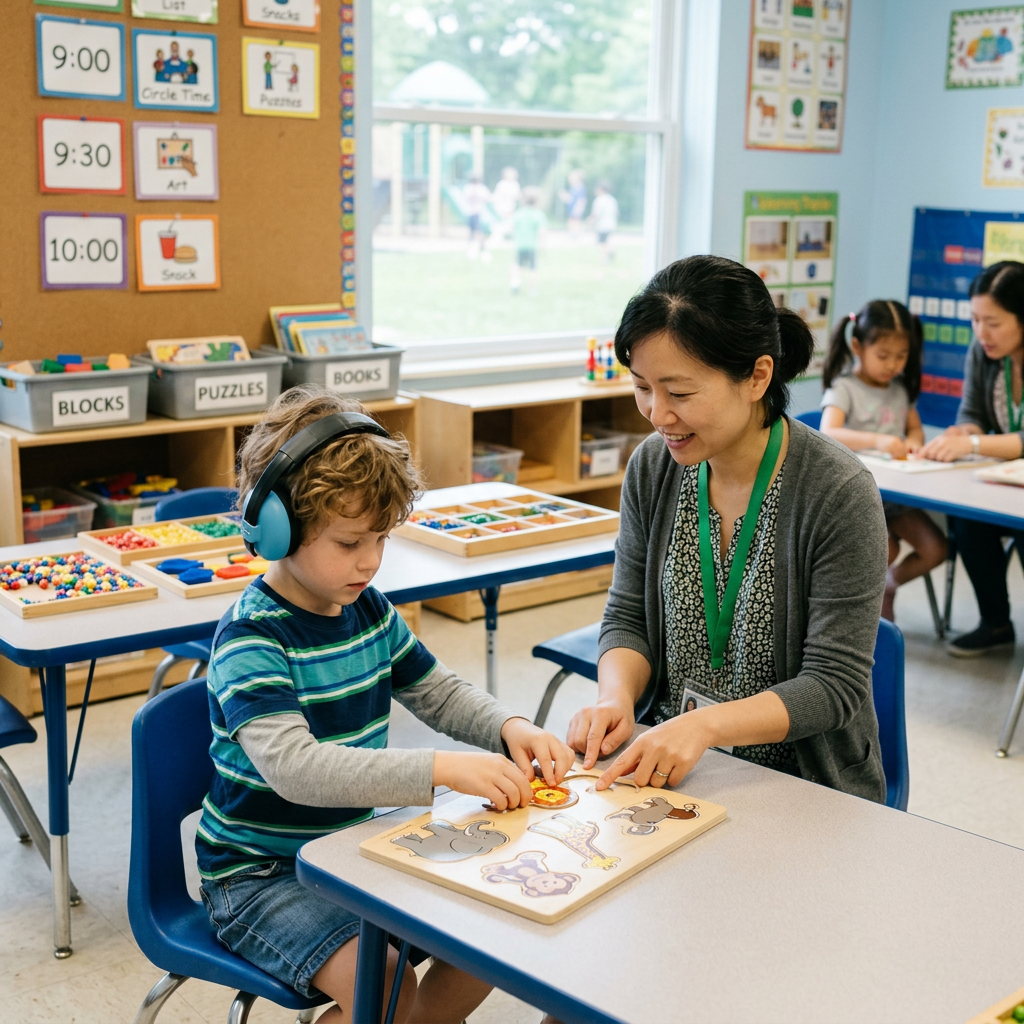
For many autistic teens, school was never just about assignments or exams. It also meant navigating environments that could feel overwhelming from the moment the day began: bright fluorescent lights, crowded hallways, unpredictable routines, social rules that often felt confusing or exhausting.
That effort doesn’t show up in grades.
But it’s real.
And the people who love them know exactly how real it is.
2. The Breakthroughs Nobody Sees
The most meaningful breakthroughs are often the ones no one applauds.
They happen quietly.
Sometimes in bedrooms. Sometimes in therapy sessions. Sometimes in cars after difficult school days.
Maybe a teen asks for help instead of shutting down.
Maybe they say, “I need space,” for the first time.
Maybe they learn that advocating for their needs isn’t weakness.
Maybe they make one real friend after years of feeling alone.
To the outside world, these moments may seem small.
But they aren’t small at all.
Sometimes a breakthrough is simply showing up on a day when everything feels hard.
Sometimes it’s trying again after burnout.
Progress in autism rarely happens in dramatic leaps. More often, it comes through small wins that slowly build into something powerful.
Tiny breakthroughs become confidence.
Confidence becomes growth.
Growth becomes transformation.
3. Why Families Feel Every Milestone
Parents carry stories no one else in the audience can see.
They remember the appointments, evaluations, school meetings, and sleepless nights filled with questions they didn’t always say out loud.
Will my child be okay?
Will they be understood?
Will they be happy?
Those questions come from love.
The deep kind.
The exhausting kind.
The kind that keeps showing up.
Families don’t just witness breakthroughs, they help create the space for them.
They advocate when systems fall short. They learn new ways to communicate. They adjust expectations and often redefine what success looks like.
That’s why graduation can feel so emotional for parents.
They aren’t only celebrating a diploma.
They’re honoring every step it took to reach this moment.
4. The Hidden Weight of School
School can be exhausting for autistic teens in ways many people never fully understand.
Imagine trying to concentrate while every sound feels amplified. Every light feels harsher. Every social interaction requires extra processing. Imagine constantly decoding a world that seems to run on unwritten rules.
That’s daily life for many autistic students.
By the end of the day, the exhaustion can be overwhelming.
Not just physical exhaustion.
Mental exhaustion.
Emotional exhaustion.
Sensory exhaustion.
Even graduation itself can be a lot.
The crowd.
The music.
The applause.
The waiting.
The bright lights.
For some autistic teens, simply making it through the ceremony is its own massive breakthrough.
And that matters.
It matters more than most people realize.
5. Parents Graduate Too
I believe this with my whole heart:
Parents graduate too.
They may not walk across the stage, but they’ve been on the journey the entire time.
They carried fear and hope at the same time. They learned to celebrate victories that other people might miss. They adapted, supported, and kept showing up, even when the road felt exhausting.
They were there for the first breakthroughs.
The first words.
The first signs of independence.
The first moments of self-understanding.
They stayed through the hard days.
That matters.
Families deserve to feel proud, not because they changed who their child was, but because they helped create an environment where growth was possible.
That kind of support changes lives.
6. What I Understand 10 Years Later
Ten years after my own graduation, I understand something eighteen-year-old me couldn’t.
The person you become after graduation is rarely the person you imagined.
Life gets complicated.
Sometimes messy.
Sometimes painful.
Sometimes beautiful in ways you never expected.
You fail.
You learn.
You heal.
You rebuild.
And somewhere in all of that, you experience your own breakthroughs.
Most of them happen so quietly you don’t even recognize them in the moment.
That’s part of why this topic feels so personal.
When I think about autistic teens graduating today, I don’t just think about where they are now.
I think about who they may become.
The confidence they haven’t discovered yet.
The peace they haven’t reached yet.
The version of themselves still unfolding.
That future exists.
Even if they can’t see it yet.
7. A Message to Autistic Teens
If I could say one thing to autistic teens graduating in 2026, it would be this:
You do not need to become less autistic to build a meaningful life.
You do not need to shrink yourself to fit someone else’s definition of normal.
You do not need to apologize for experiencing the world differently.
Different does not mean broken.
Different does not mean behind.
Different does not mean less.
Sometimes the very things that make you different are where your greatest breakthroughs will come from.
Be patient with yourself.
You are not finished becoming.
And you don’t need to have everything figured out right now.
8. Conclusion

Ten years after my own graduation, I see this clearly:
Graduation was never about becoming finished.
It was about stepping into the unknown.
For autistic teens and their families, that moment carries extraordinary emotional weight because the journey often demanded more: more resilience, more patience, more courage.
The cap and gown matter.
But the breakthroughs matter more.
Because breakthroughs tell the real story.
They are proof of growth.
Proof of strength.
Proof of survival.
Proof that becoming is still happening.
And the beautiful thing is:
Becoming never really ends.
If you enjoyed this blog story, check out more great content in the following links:




Leave a Reply