
Table of Contents
Introduction

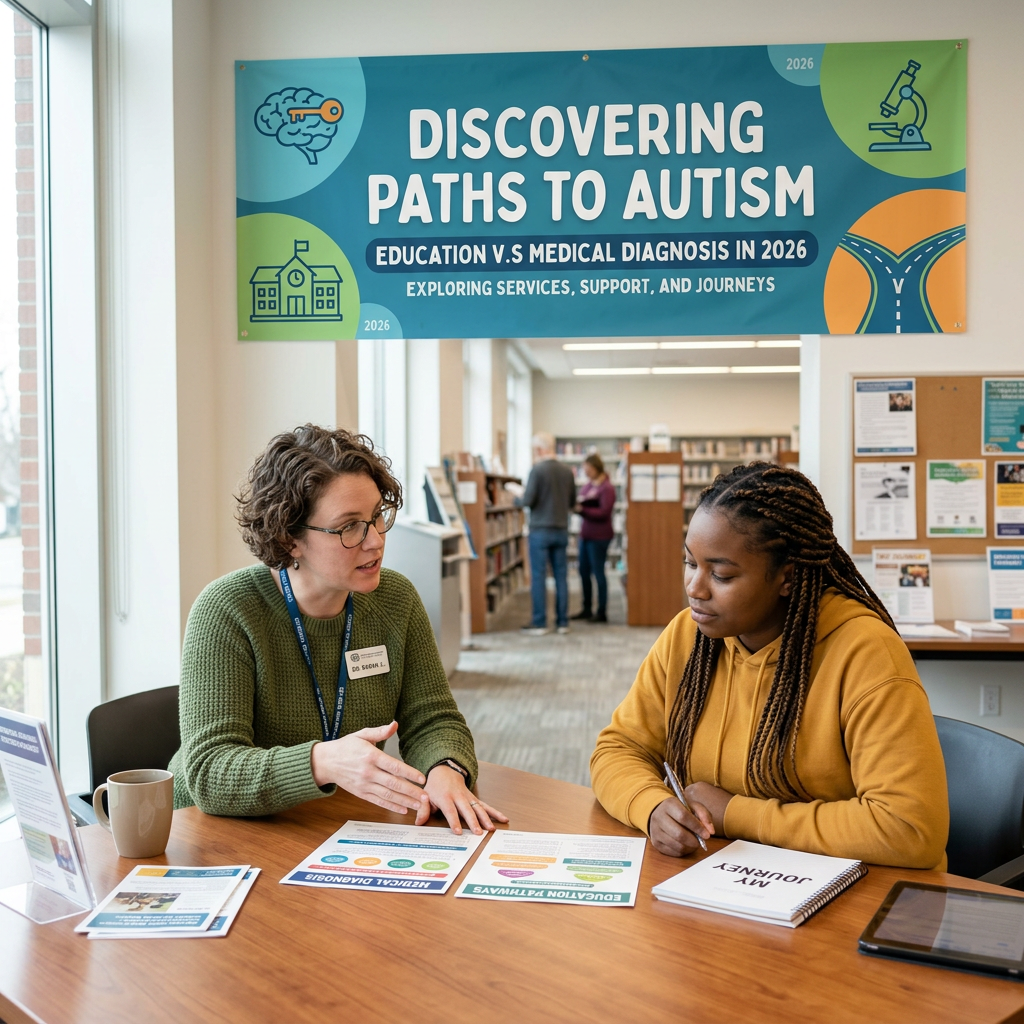
Every autistic individual deserves opportunities to learn, grow, and experience a brighter future. However, understanding autism does not always follow one straightforward path. For families navigating evaluations, school services, and medical appointments, one question often comes up: What is the difference between an educational autism classification and a medical diagnosis?
Although these two processes share similarities, they serve different purposes. Understanding the distinction can help neurodivergent individuals and their families make informed decisions, find appropriate resources, and discover brighter paths toward meaningful support.
Understanding a Medical Autism Diagnosis
A medical autism diagnosis is completed by a qualified healthcare professional who evaluates an individual’s developmental history, communication, social interaction, behaviors, and other characteristics associated with Autism Spectrum Disorder (ASD).
The diagnostic process can look different depending on the individual’s age, developmental history, and the professionals conducting the evaluation. In the early 2000s, when I was very young around age 2, I received my autism medical diagnosis through a neurologist at Downstate Hospital in New York. My evaluation involved observations and interviews with my parents, who shared important information about my early development and experiences.
Looking back, this experience reminds me that understanding autism is not always about one particular test or appointment. Sometimes, it involves listening to parents, observing a child’s development, and bringing together different pieces of information to understand the individual as a whole.
For some families, receiving a diagnosis brings relief. It provides an explanation for experiences they may have struggled to understand for years. For autistic adults, a diagnosis can offer an opportunity to better understand themselves and recognize that their differences have always been part of who they are.
There is no single blood test that determines autism. Instead, qualified professionals use developmental information, observations, interviews, and other assessment methods to make a clinical determination.
Understanding Educational Autism Eligibility
An educational autism classification serves a different purpose. Rather than determining whether someone meets medical diagnostic criteria, schools evaluate how a student’s developmental characteristics affect their educational experience and whether they need special education services.
Under the Individuals with Disabilities Education Act (IDEA), students may qualify for special education under the autism category when autism adversely affects their educational performance and they require specialized instruction.
This process considers more than academic performance. Communication, social interactions, sensory experiences, transitions, and participation in classroom activities can all be important considerations.
My own educational journey began with an Individualized Education Program (IEP) early in childhood. Because I already had a medical diagnosis of autism, my diagnosis helped establish the foundation for the educational services I received. Those early supports played an important role in helping me develop skills and navigate different learning environments.
However, one important distinction families should understand is that a medical autism diagnosis is not required for a school to conduct an educational evaluation for autism eligibility. Schools can independently evaluate a student when there are concerns about their development and educational needs. A medical diagnosis does not automatically guarantee an IEP, either. The school must determine whether the student meets educational eligibility requirements.
These distinctions are important because families should not feel that they have to wait for a medical diagnosis before exploring educational support. There are brighter opportunities when parents understand their rights and know where to begin.
An educational evaluation helps school teams identify individual strengths, areas of need, and appropriate supports. When eligible, students may receive an IEP designed around their educational needs.
Medical Diagnosis vs. Educational Eligibility: Why Both Matter

As mentioned earlier, one important distinction families should understand is that a medical diagnosis does not automatically guarantee special education eligibility. Likewise, a student does not necessarily need a medical autism diagnosis before a school can evaluate them for educational services.
These processes can complement one another while addressing different needs.
A medical diagnosis can help families understand their child’s developmental profile, while educational eligibility focuses on accessing appropriate support within the learning environment.
Neither process should define an individual’s potential. Every autistic person has unique strengths, challenges, interests, and ways of experiencing the world.
Finding Brighter Paths Forward for Neurodivergent Individuals and Families
Navigating autism evaluations can feel overwhelming, especially when families are unfamiliar with the terminology and different systems involved. However, understanding these distinctions can create brighter opportunities for advocacy and support.
Parents can begin by discussing developmental concerns with their child’s healthcare provider while also contacting their local school district about evaluation options. Families should not assume they must wait for a medical diagnosis before requesting a school evaluation.
Most importantly, remember that autism is not a measure of someone’s intelligence, worth, or future possibilities. Whether an individual receives a diagnosis early in childhood or discovers their neurodivergence during adulthood, their experiences deserve understanding and respect.
Conclusion: Creating Brighter Opportunities Through Understanding
Medical diagnoses and educational classifications may follow different paths, but both can contribute to a better understanding of an individual’s needs. For neurodivergent individuals and their families, knowing the difference creates brighter opportunities to access resources, advocate for meaningful support, and celebrate individual strengths.
A brighter future does not come from a label alone. It comes from recognizing the person behind the paperwork, listening to their experiences, and creating environments where they can thrive as their authentic selves.
If you enjoyed this blog story, check out more great content in the following links:



Leave a Reply