
Table of Contents
Why This Moment Feels Urgent

There is something undeniably urgent happening inside modern workplaces. Employees are no longer quietly tolerating systems that exhaust them. Conversations about burnout, inclusion, and psychological safety are no longer side discussions—they are front and center. For years, organizations approached workplace struggles by asking individuals to adapt, toughen up, or improve resilience. The urgent reality emerging in 2026 is that people were never failing work; work was failing people.
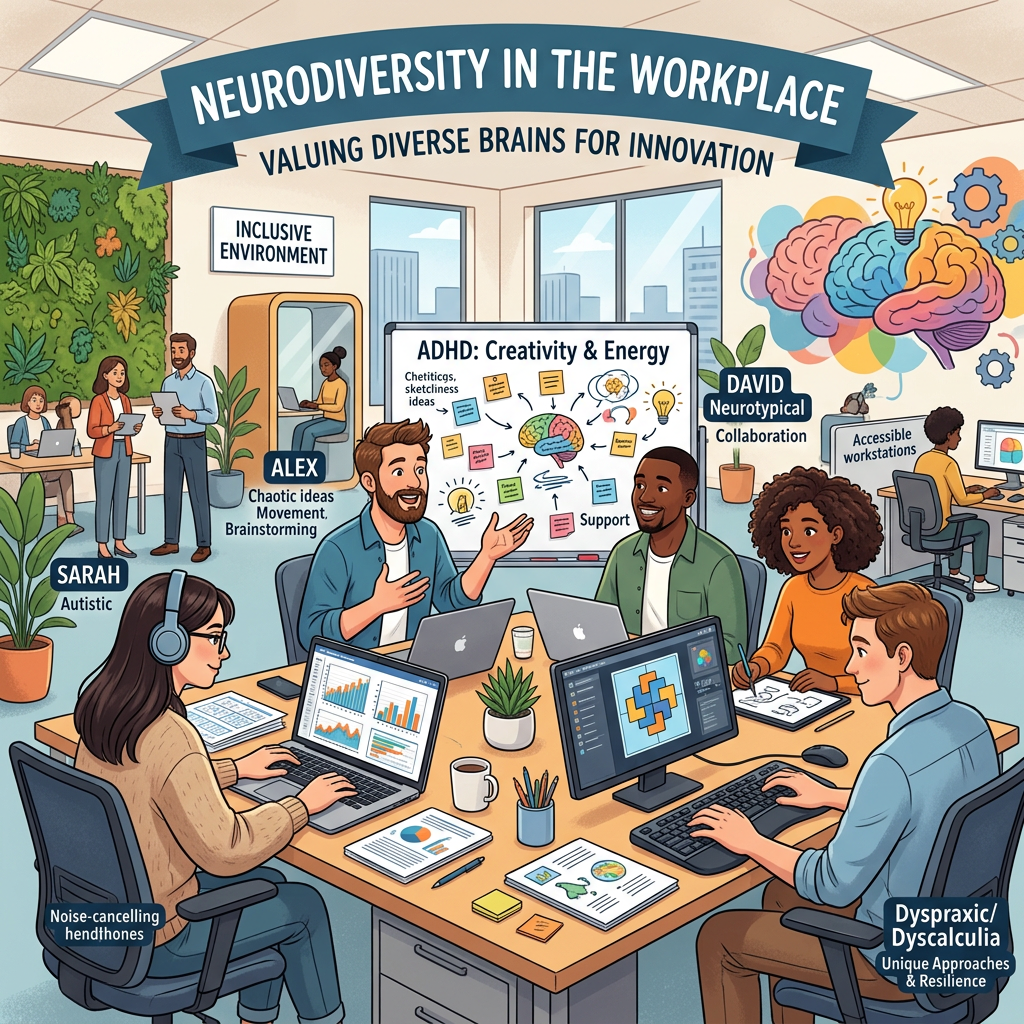
Many employees today carry invisible cognitive differences—ADHD, autism, dyslexia, anxiety-driven processing styles, or sensory sensitivities. These differences are not new. What feels urgent now is the growing recognition that forcing everyone into identical schedules, communication styles, and productivity expectations creates unnecessary suffering. The workplace is experiencing a cultural reckoning. Leaders are realizing that innovation cannot thrive in environments built on conformity rather than understanding.
Understanding Neuro-Affirming Workplaces

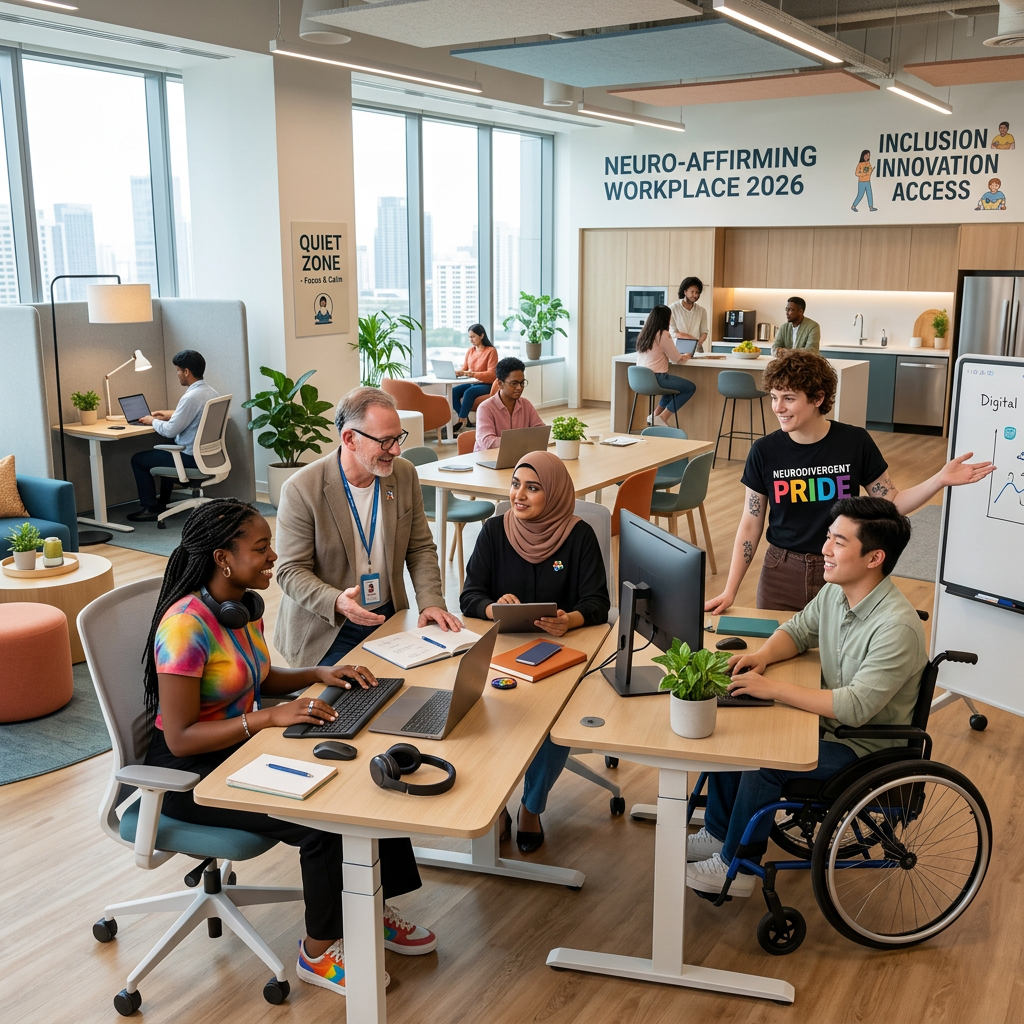
A neuro-affirming workplace recognizes that human brains operate differently, and those differences hold value. This shift is deeply urgent because traditional workplace norms were built around a narrow idea of professionalism—extroverted communication, constant availability, and uninterrupted focus. For many workers, these expectations required exhausting emotional labor just to appear “normal.”
Neuro-affirming policies move beyond accommodation checklists. Instead of offering occasional adjustments only after someone struggles, organizations redesign environments proactively. Flexible working hours, alternative communication formats, sensory-friendly spaces, and outcome-based performance measures become standard. The urgent message is powerful: inclusion should not depend on disclosure or diagnosis.
Moving beyond accommodation means asking better questions. Rather than “How can this employee fit the system?” leaders ask, “How can the system support different minds?” That perspective change feels small but carries an urgent emotional impact. Employees begin to feel seen rather than evaluated, supported rather than corrected.
The Human Cost of Ignoring Neurodiversity

The cost of ignoring neurodiversity has always been urgent, even if organizations failed to recognize it. Many talented professionals spend years masking traits to survive corporate expectations. Masking might look like forcing eye contact, suppressing stimming behaviors, over-preparing conversations, or working twice as hard to compensate for executive functioning differences.
This constant self-monitoring leads to burnout that feels deeply personal but is structurally caused. Employees often blame themselves, believing they lack discipline or resilience. The urgent truth is heartbreaking—many were thriving individuals placed in environments that drained them.
The long-standing productivity myth suggests pressure improves performance. Yet workplaces increasingly discover the opposite. Creativity requires safety. Problem-solving requires cognitive diversity. When employees are free to work according to their natural strengths, productivity improves organically. What once seemed like an accessibility initiative becomes an urgent competitive advantage.
The Rise of Neuro-Affirming Policies
Across industries, neuro-affirming policies are gaining momentum because the need has become urgent and undeniable. Companies are introducing asynchronous communication, flexible meeting formats, sensory-aware office designs, and personalized work rhythms. Hybrid work models accelerated this transformation, proving that rigid schedules were never essential to productivity.
Inclusive communication practices are especially urgent. Clear written instructions, predictable workflows, and reduced meeting overload benefit not only neurodivergent employees but entire teams. Confusion decreases, expectations become transparent, and collaboration improves naturally.
Organizations embracing neuro-affirming approaches report stronger retention and engagement. Employees who feel understood invest more emotionally in their work. The urgent shift lies in recognizing that inclusion is not charity—it is strategy.
Leadership’s Responsibility
Leadership plays the most important role in this transformation. Policies alone cannot change culture; everyday behaviors do. Managers shape whether employees feel safe enough to ask for clarity, request flexibility, or express different working styles.
Psychological safety has become an urgent leadership competency. When leaders normalize diverse communication styles and stop rewarding performative busyness, trust grows. Teams become more honest about challenges, which allows organizations to solve problems faster.
An urgent leadership mindset requires humility. It means admitting that traditional workplace norms may have unintentionally excluded capable people. Leaders who embrace curiosity instead of control create environments where innovation thrives naturally.
Technology and Accessibility

Technology has accelerated this evolution. AI-driven transcription tools, task management systems, and adaptive interfaces reduce cognitive load and support multiple thinking styles. What once required special accommodation now exists as mainstream productivity technology.
Digital tools allow employees to control how they receive information—visual, written, or audio formats—making collaboration more inclusive. The urgent opportunity lies in using technology to enhance humanity rather than replace it. When accessibility becomes default design, workplaces become more efficient without sacrificing empathy.
A Personal Reflection on Work and Humanity
On a personal level, this movement feels profoundly urgent because work shapes identity, confidence, and well-being. Many people grew up believing they needed to change themselves to succeed professionally. The rise of neuro-affirming workplaces challenges that narrative entirely.
Imagine a workplace where energy is spent creating rather than masking, collaborating rather than coping. That vision no longer feels idealistic—it feels urgent and achievable. When organizations stop fixing people and start fixing systems, something remarkable happens: work becomes sustainable.
The future of work is not about perfection. It is about permission—the permission to think differently, communicate differently, and succeed differently. And perhaps the most urgent realization of all is this: diversity of mind is not a problem to manage; it is a strength waiting to be embraced.
Conclusion
The rise of neuro-affirming policies represents an urgent turning point in workplace culture. Organizations that redesign environments around human diversity will lead the future of innovation and employee well-being. The message is clear and emotionally powerful: people were never broken. Workplaces simply need to evolve—and that evolution is urgent now.
If you enjoyed this blog story, check out more great content in the following links:


Leave a Reply